

Planting Trees and Hedgerow
The most wonderful time of the year
Winter is upon us, which means it’s planting season. This article provides basic guidance around how to plant trees and hedgerow – so worth a read if you’re considering planting over the next few months.
Planting a tree
Planting even one tree can have enormous benefits to local wildlife, encourage biodiversity and improve soil quality. However, there are some important points to consider before you plant your very own natural carbon capture device.
- What will be the eventual height and spread of your tree? *
- Will it obstruct you or any neighbours’ view?
- Will it fit in the allocated space?
- Is it far enough away from existing trees or hedges to get sufficient light and water?
- Will the branches or roots cause structural damage to surrounding properties, including underground structures such as water pipes, cables and building foundations?
* Woodland Trust‘s website provides extensive information on different tree species.
When to plant
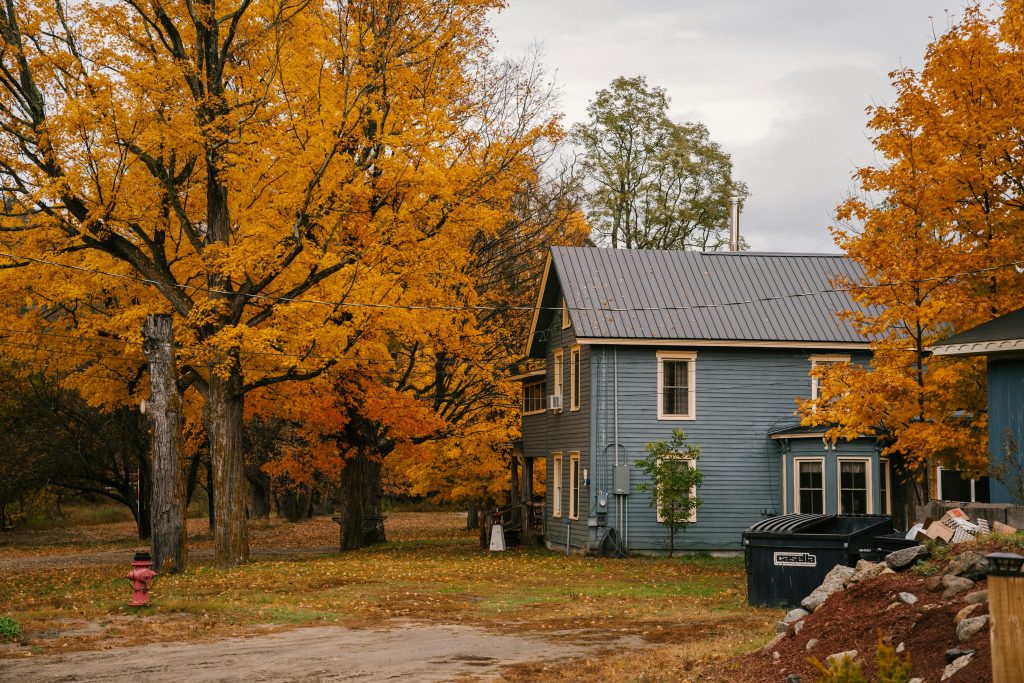
The ideal planting time is November to March, when trees can direct their energy towards establishing their roots. Individual trees can be planted outside this period, but they will require more watering, especially in extended dry periods or droughts. This is particularly important in their first couple of summers.
Ideally, however, trees should be dormant when planted as they have a much higher chance of survival than thoseactively growing, which are more likely to experience transplant shock.

How to plant your tree
- Dig a hole deep enough to accommodate the roots.
- Hold the root ball and its soil against one side of your hole and backfill with soil or compost (peat-free), ensuring all the roots are covered.
- Firm down the soil using your hands and the heel of your boot, squeezing out any air pockets.
- Give your tree a little tug, ensuring it is firmly embedded.
- Set up any form of tree guard and/or stake, if you are using one, and water.
This technique is known as pit planting. For further guidance check out this Woodland Trust video.
Tree maintenance
Your tree is planted but your work is not done; now you must help your tree to survive and thrive. This is especially important when it comes to carbon sequestration, as mature and established trees use more CO2 and store more carbon.
Water thoroughly every 7-10 days to ensure water soaks deep into the soil, rather than small amounts frequently. Inserting an upturned plastic bottle beside the tree, with its base cut off and lid removed, can provide a simple water delivery device. Filling this upturned bottle ensures a steady delivery of water deeper into the soil, encouraging deeper root growth.
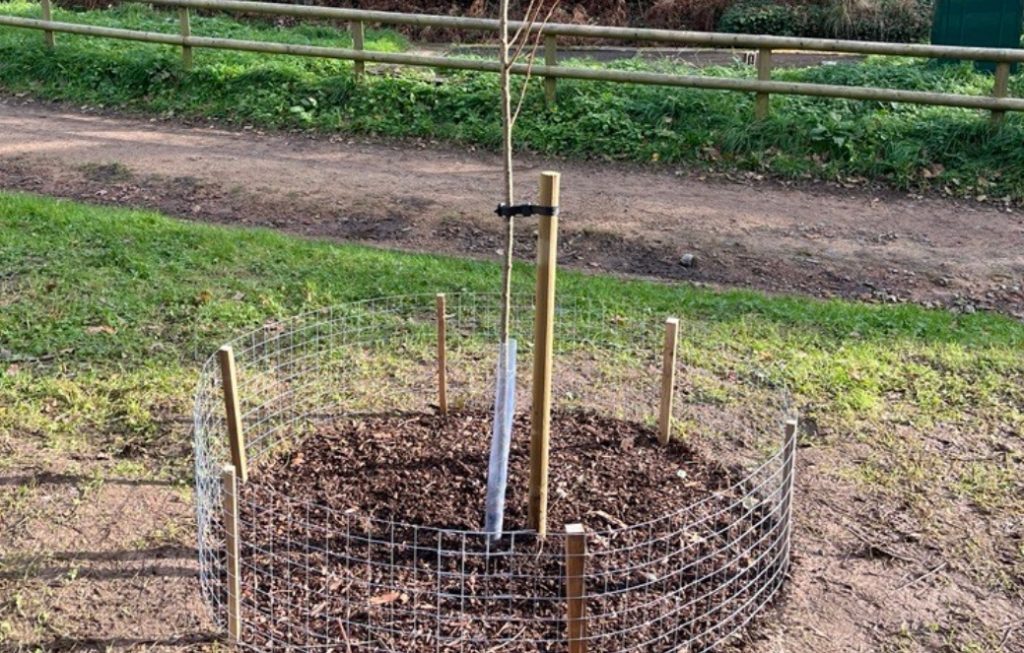
For the first two to three years maintain a one-metre diameter clear of weeds and grass around the base of the tree. This will reduce competition for water.
Apply a mulch around the base of the tree. This will inhibit regrowth of weeds and reduce evaporative water loss.
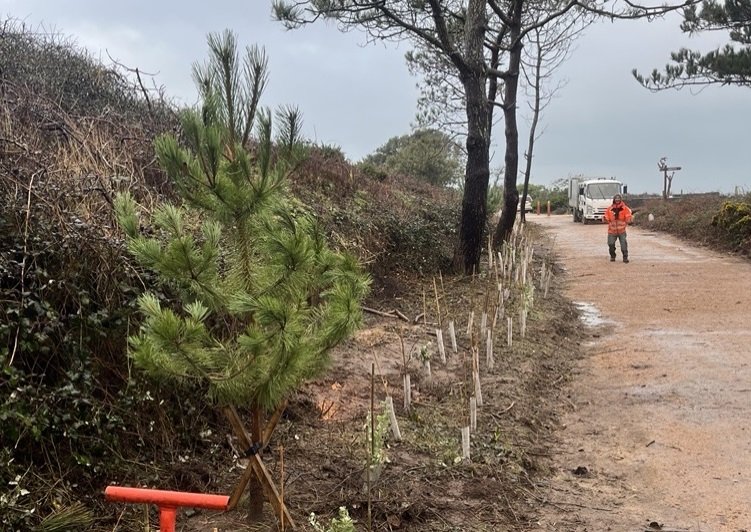
Planting hedgerow
As with trees, planting the right hedgerow in the right place has a a meaningful impact in addressing climate change and in particular the loss of biodiversity. Hedgerows can be thought of as “linear forests” and indeed have many of the benefits of woodlands.
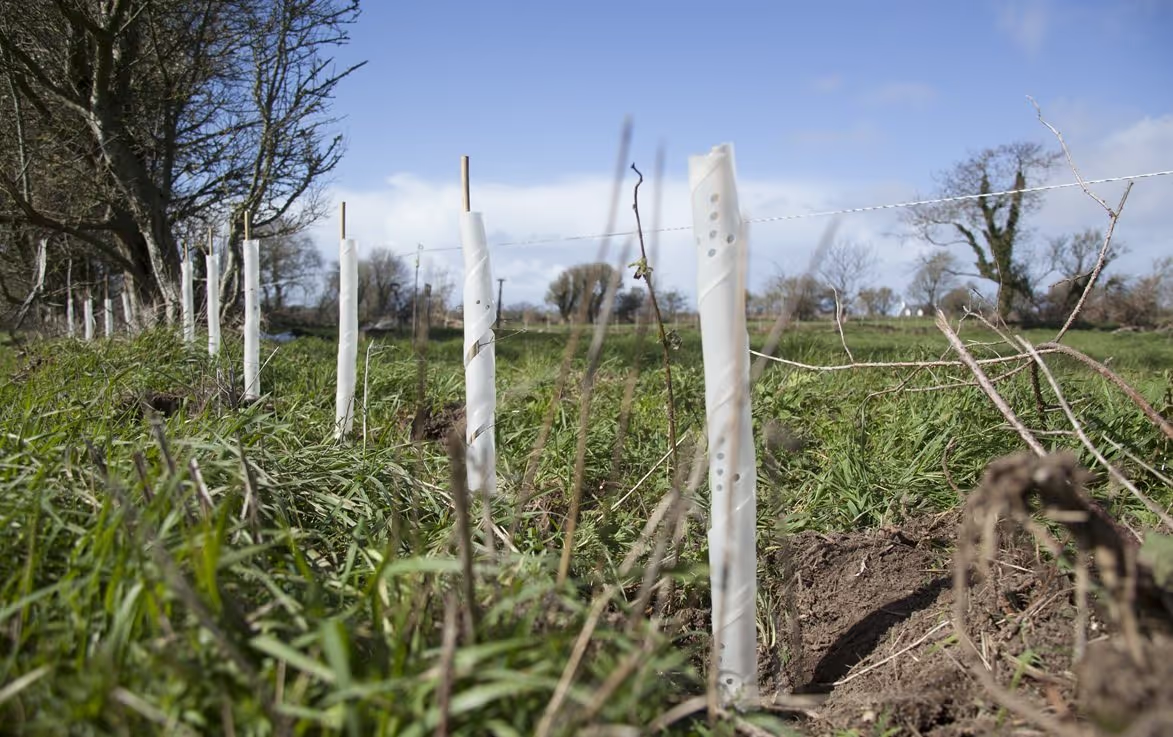
The young plants used to make new hedgerow are called whips. They’re typically around 60-90 cm tall and look like dead twigs with some straggly roots.
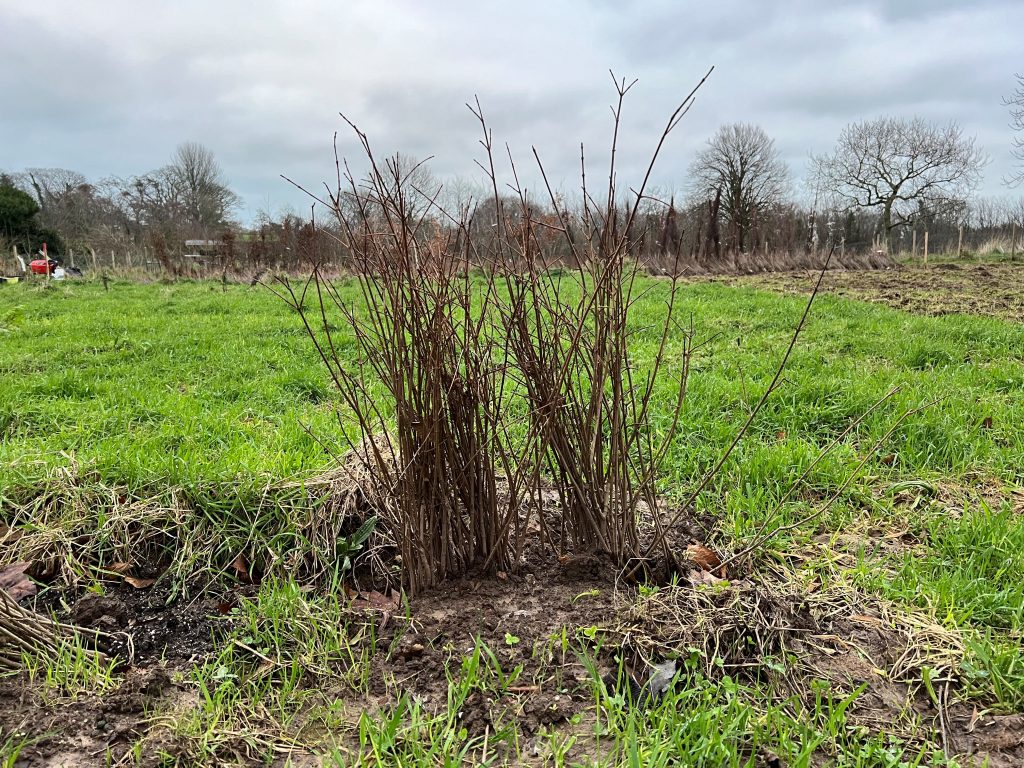
We recommend a mixture of native species for hedgerow, including hawthorn, blackthorn, hazel, elder, field maple, rowan, holly, wild privet and oak. Native species are more resilient to our local climate, soil conditions, pests and diseases. Similarly, planting locally sourced trees eliminates any risk of importing new pests and diseases.
Our favoured technique for hedgerow is called slit planting:
- Push a spade down into the ground, approximately to the depth of the spade blade.
- Keeping the spade in the ground, move it backwards and forwards, creating a gap in the soil.
- Insert the whip into the space you have created, gently spreading out the roots.
- Don’t plant the whip too deep; the point where the roots flare out from the root stem must be level with the surrounding soil.
- Holding the whip in place at the correct depth, firm down the soil around it with your foot, closing the gap and removing large air pockets.
- Give the whip a gentle tug to ensure it is firmly embedded.
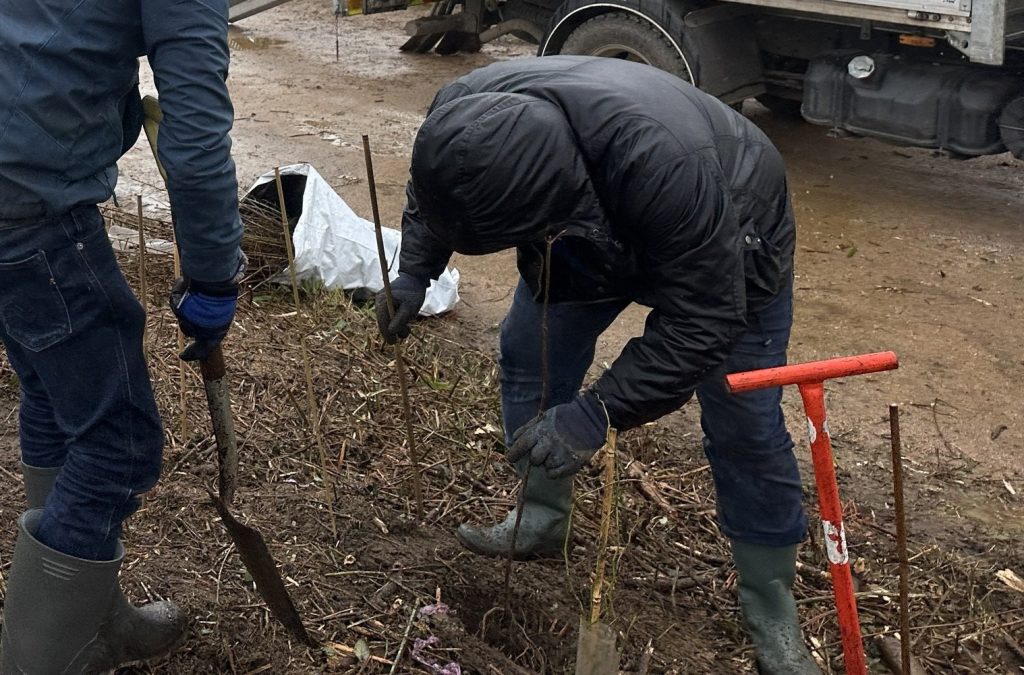
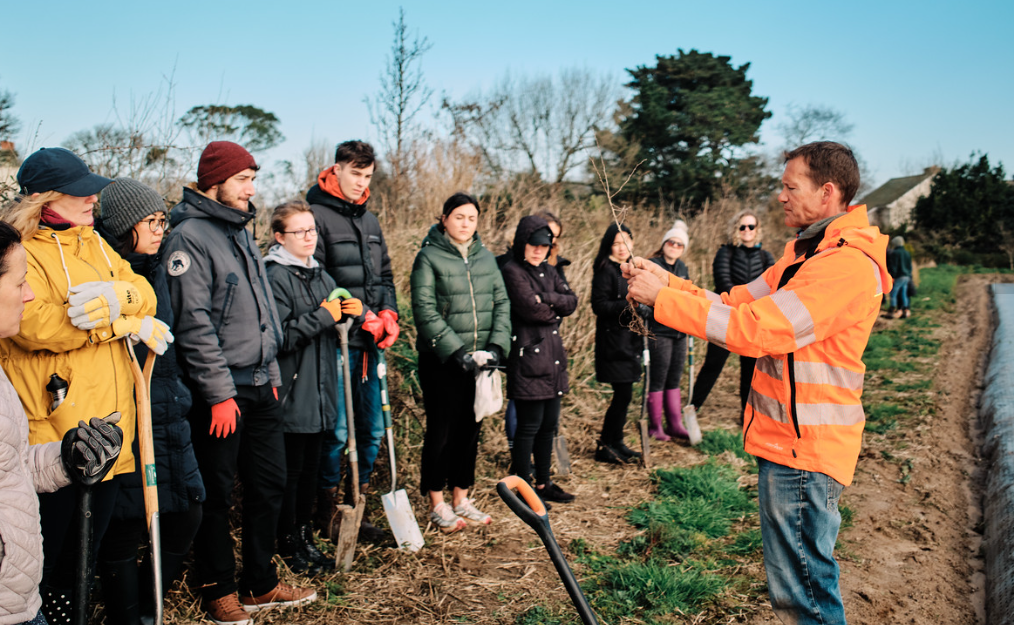
As ever, Woodland Trust provides some great planting advice including a video. It’s definitely worth a watch for those of you with winter planting plans.

In winter 2023-24 we planted over 13,000 trees and whips during our Hedgerow Campaign, creating new wildlife habitats and corridors, preventing soil erosion, combating pollution and locking up carbon. We couldn’t do this work without our volunteers, so a huge thank you to everyone who’s helped us plant.
Make a difference
Every donation plants roots for Jersey's future. Support our work today.

What we've achieved together
Since our founding, Jersey Trees for Life has grown from a vision into a thriving community. Here's what we've built.