

Mycorrhizal Relationships
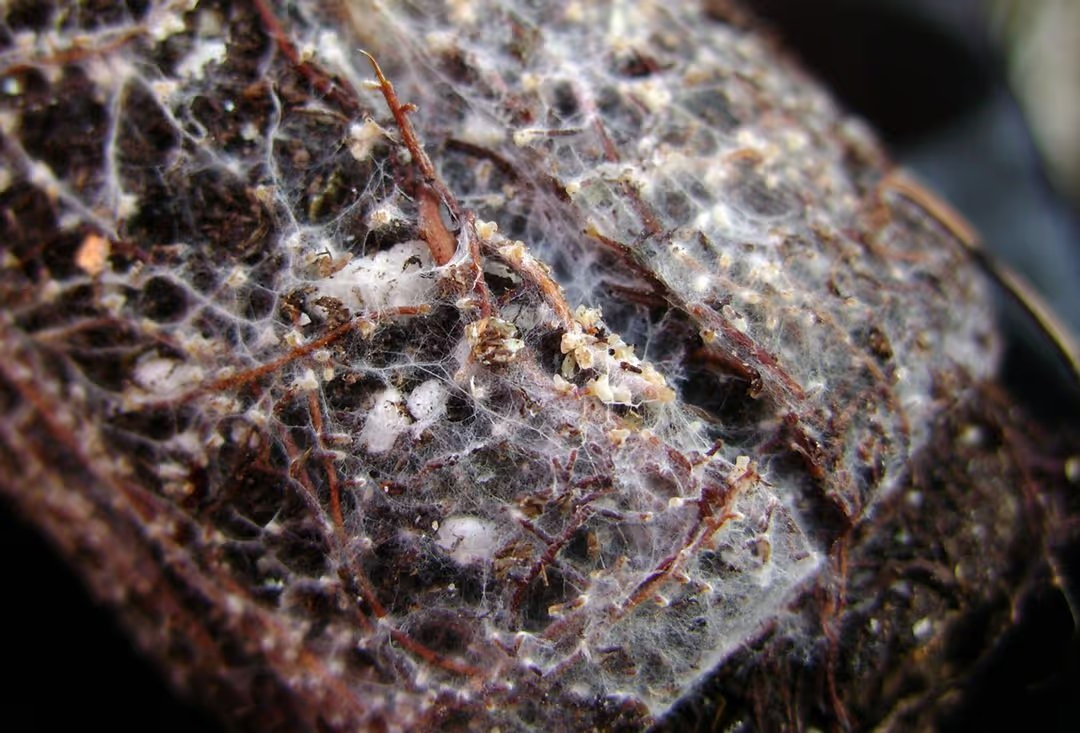
The power of relationships
Latin speakers will know that ‘myco’ means fungi and ‘rhiza’ means tree roots. Together they make the word ‘mycorrhizal’ which refers to the symbiotic relationship between the two. But what exactly does this mean, how does it work and why is it so important?

Fungi and tree (also other plant) roots work together in a mutually beneficial way – the tree photosynthesises, sending the resultant carbohydrates to the fungus, while in return the fungus supplies water and mineral nutrients, especially phosphorus and nitrogen. It achieves this by colonising and extending the host’s root system, thereby providing better access to these vital resources, which is important in poor quality soil or drought conditions and especially so during the early stages of a tree’s life when it is establishing itself.
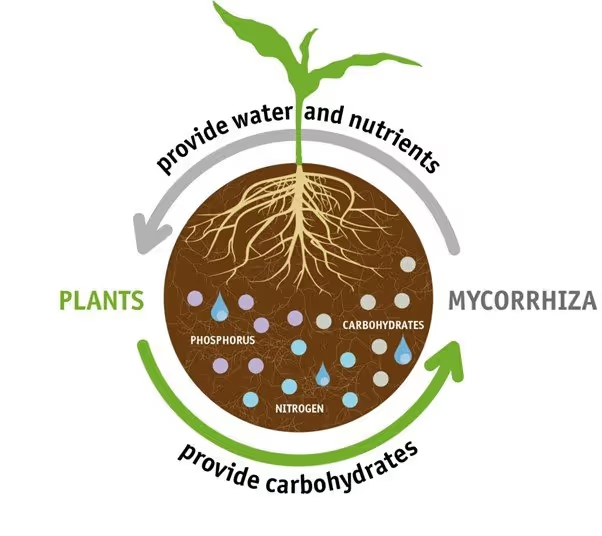
Mycorrhizae can provide various other benefits too. For example, they strengthen surrounding soil, reducing erosion and improving water and nutrient retention. They also help fight climate change by sequestering carbon and storing it underground. If these benefits sound familiar, it’s probably because you’ve heard us applying them to hedgerow.
There’s more, though. Some mycorrhizae protect their tree from pathogens by producing chemicals that suppress harmful microorganisms. Further, they can improve a tree’s tolerance to environmental stresses including drought, salinity and heavy metal contamination.
Mycorrhizal networks can be used as early-warning systems too. For example, when a tree is attacked by a predator, it sends signals to its neighbours to release a repellent compound.
While the benefits of mycorrhizae are manifold, however, it’s not all one big mutual appreciation society. Certain mycorrhizae are parasitic and, in such cases, can limit tree growth by commandeering the nutrient supply. They’re often sensitive to fertilisers and pesticides as well, which can destroy the finely balanced chemical relationship, damaging crop quality and size.
Types of mycorrhizae
Broadly speaking, there are two groups of mycorrhizae – ectotrophic and endotrophic (‘ecto’ is Latin for outside and ‘endo’ for inside). These terms refer to the location of the fungal hyphae (microscopic filaments) in relation to the tree’s roots – or to put it more simply, ectomycorrhizae do not penetrate the tree’s cells while endomycorrhizae do.
In the case of the former, the fungi do their work without cell penetration by surrounding the tree roots, extending through the soil and into the gaps between the root cells. This creates a dense protective barrier from soil-borne pathogens called the Hartig Net.
Conversely, endomycorrhizae penetrate the cell walls to form tree-like structures known as arbuscules (hence they’re also known as arbuscular fungi). They specialise in phosphorus uptake and are far more prevalent than their non-penetrating cousins.
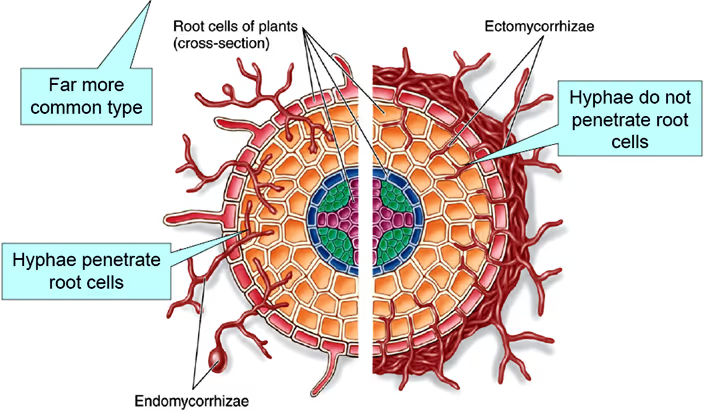
Less prevalent generally, ectomycorrhizae are most common in conifers and hardwoods, with examples including alder, beech, oak, fir, pine and spruce.
Endomycorrhizae are ubiquitous, found in most green leafy plants, legumes, flowers, shrubs and the like. Host trees include ash, cedar, cypress, juniper, maple and redwood.
Overall, 80-90% of vascular plants are estimated to host one or more type of mycorrhiza, making its absence relatively rare.
Wood Wide Web
The natural phenomenon of mycorrhizal relationships is often now referred to as the ‘Wood Wide Web’, for (we hope) obvious reasons. We’re not averse to the odd pun, so are fine with that.

Make a difference
Every donation plants roots for Jersey's future. Support our work today.

What we've achieved together
Since our founding, Jersey Trees for Life has grown from a vision into a thriving community. Here's what we've built.