

Ivy ideas
Remain or remove?
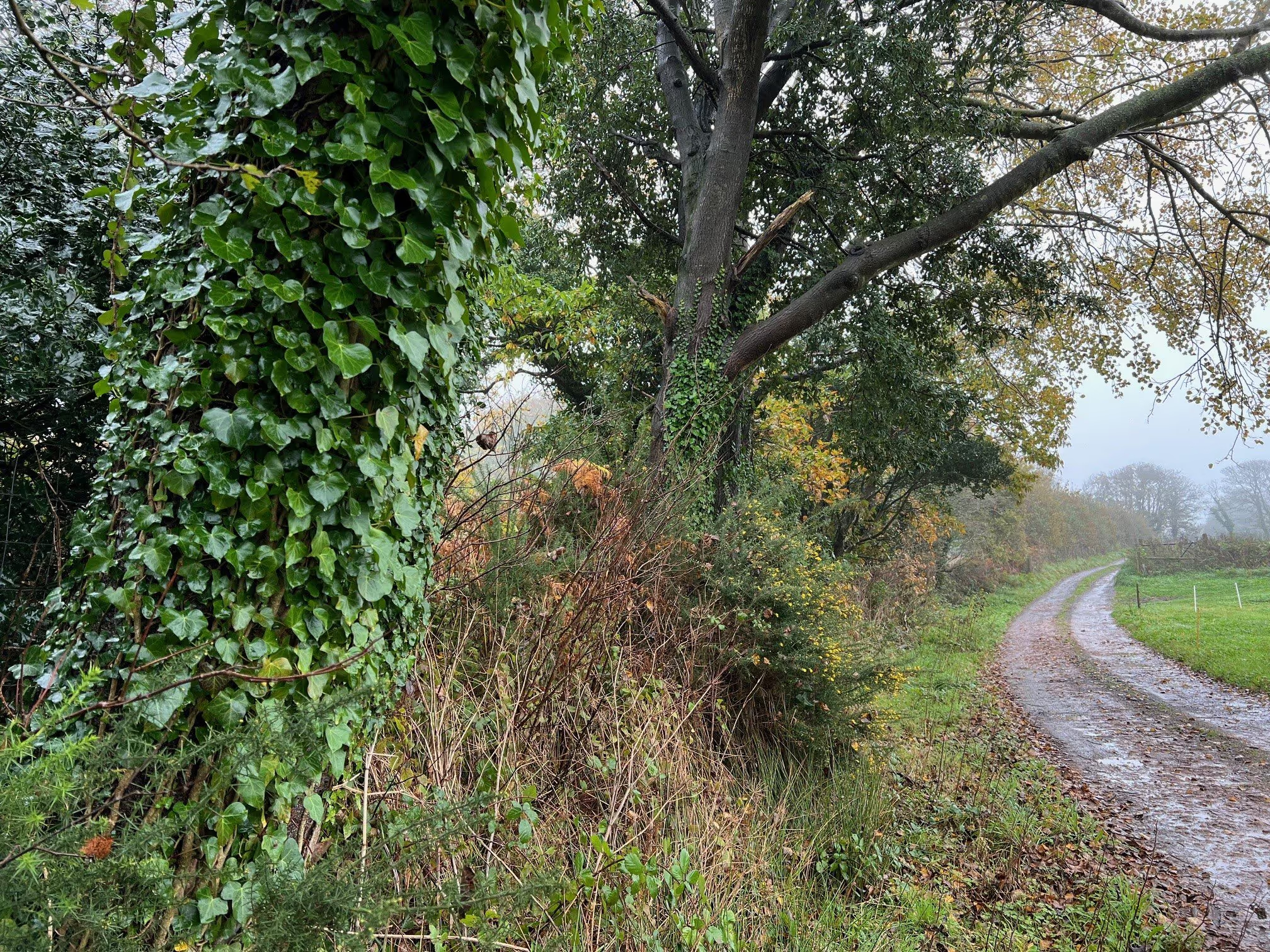
Ivy is a fast-growing, dense, waxy-leaved evergreen climber that can grow as high as 30m and needs little introduction, being as common as it is in Jersey. In fact, the Channel Islands and UK are host to two native species – common or English ivy (Hedera helix) and (inset in image) Atlantic ivy (Hedera hibernica).
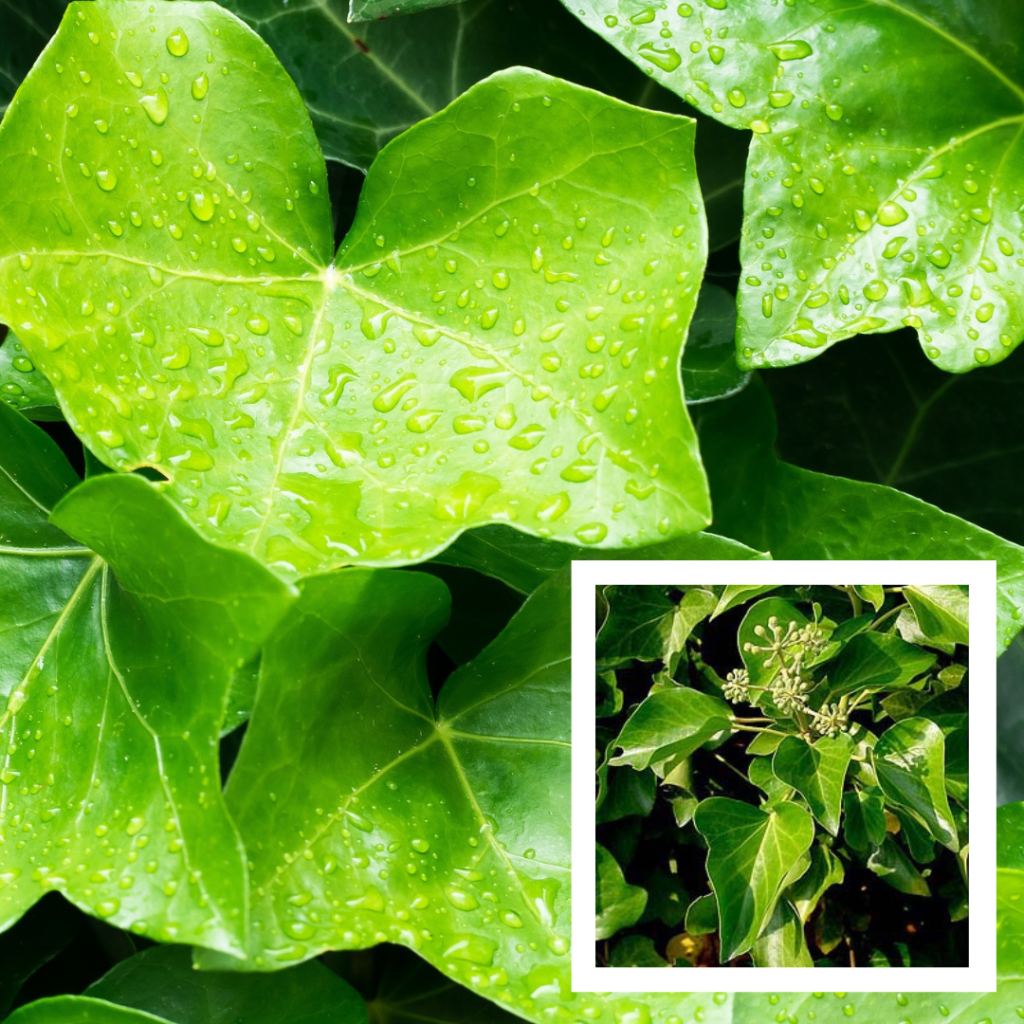
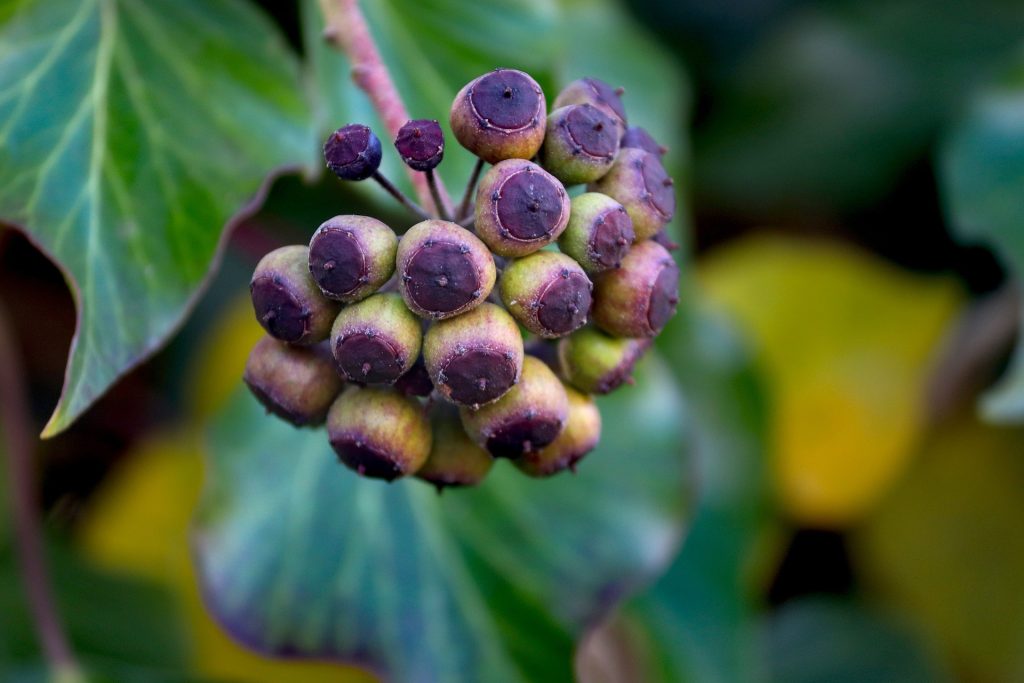
A vital point about ivy is that is doesn’t directly harm trees. Unlike mistletoe, for example, it is not parasitic – it has its own roots to feed and gather water and only attaches itself to the bark. It’s also habitat for birds, insects, bats and small mammals, while its black-purple berries provide an important autumnal food source. It provides late-season nectar for pollinators too.
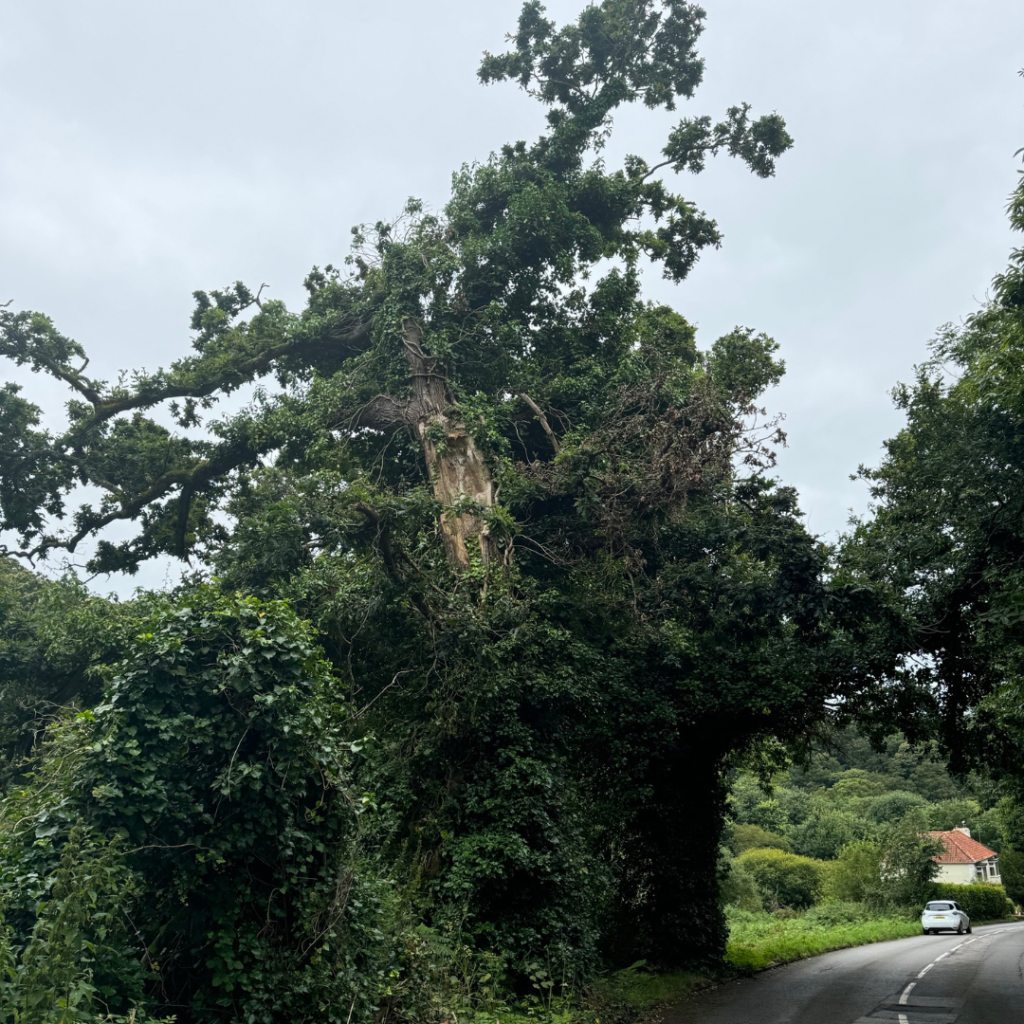
However, ivy is a prolific grower that can rapidly obscure attractive bark, block out sunlight and make it more susceptible to pests. Most importantly, it can create excess weight in the tree canopy, potentially leading to stability issues. This is especially acute in trees with less dense canopies, such as ash.
When and how
Autumn is an ideal time to remove excess ivy on your trees, largely because it means you won’t disturb any nesting birds. Needless to say, we only support ‘natural’ control methods, i.e. those without the use of pesticides, which are damaging to wildlife.
It’s always worth wearing gloves and long sleeves when removing ivy, as it can cause allergic reactions. We recommend doing so as a matter of course for any work of this nature.
The best natural method of total removal is to cut stems to ground level and dig out the woody stump. If this is likely to damage the tree roots, however, it’s best to play it safe and continue cutting back to ground level as it grows back.
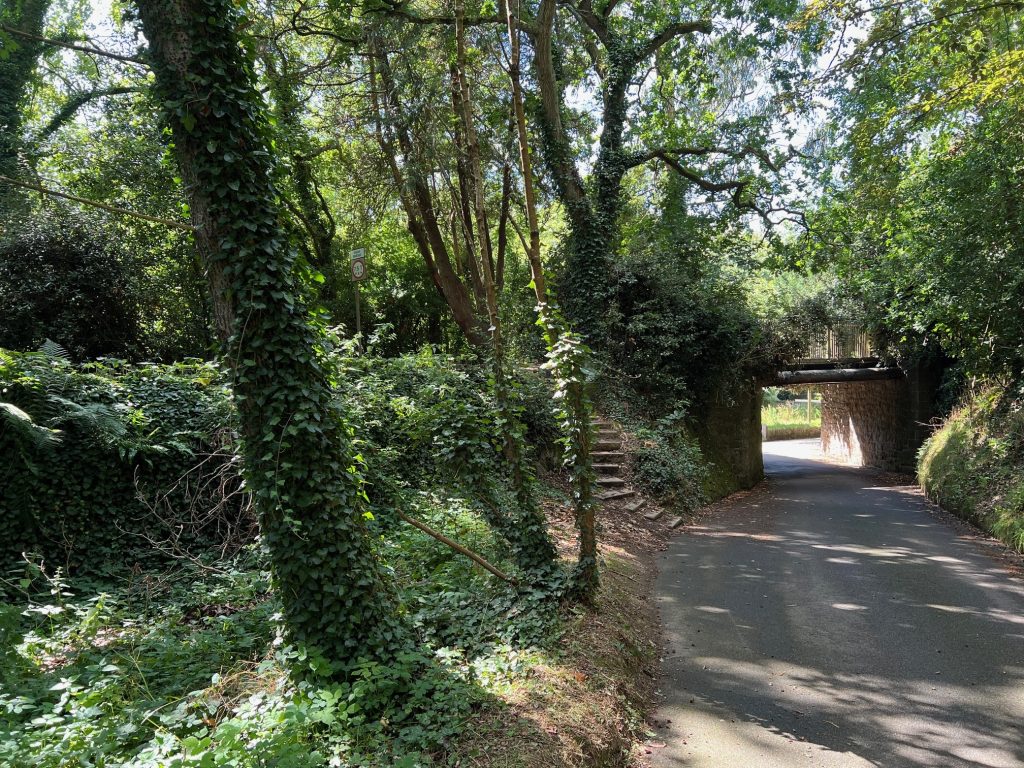
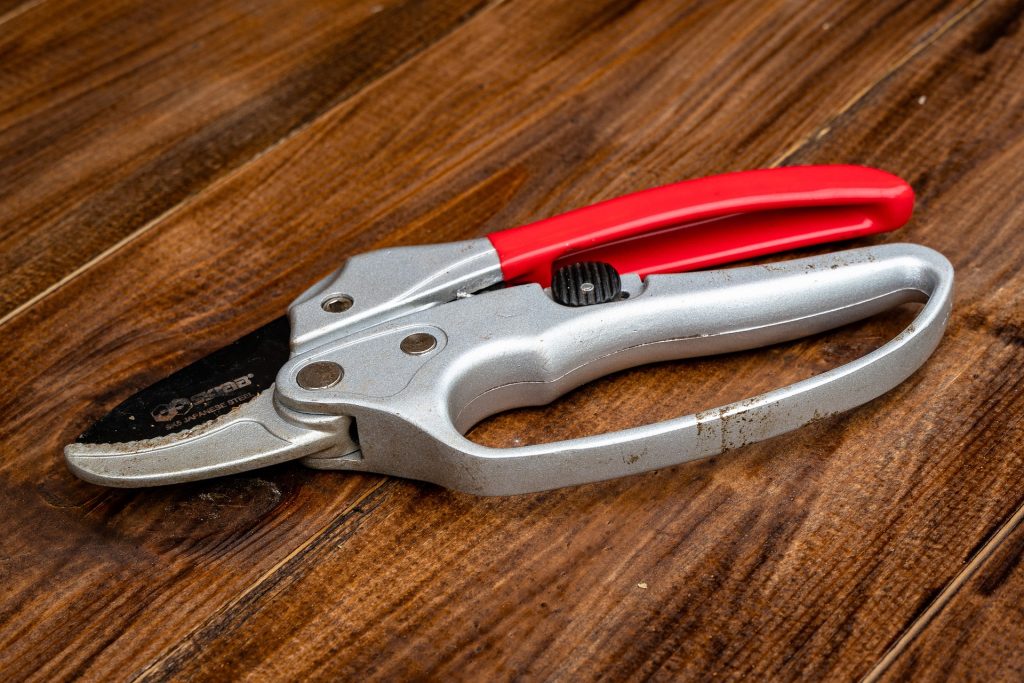
It’s easier to remove ivy from wet soil, which means it’s best to either wait for rainfall or water the area. Then, cut the stems from their roots at the foot of the tree, using hand pruners. Finally, pull out the roots and leave the ivy on the tree to die.
Another lighter-touch method that we recommend is to cut out a section of about 30cm (12”) of ivy from the trunk, at a minimum distance of 60cm (24”) from ground level. Doing so will block its flow of nutrients to the canopy, keeping it ivy-free while leaving the lower trunk and any residing wildlife untouched.
You should always cut ivy carefully, ensuring you don’t damage the tree bark – hence we recommend using pruners as opposed to an axe or billhook. That said, ivy vines can grow surprisingly thick and sometimes even merit the use of a saw.
When tackling ivy groundcover, the technique is no different – remove the stems and roots, or prune regularly. If this isn’t practical, you’ll have to play the long game, keeping it covered with organic matter for years until the resilient plant finally runs out of nutrients.
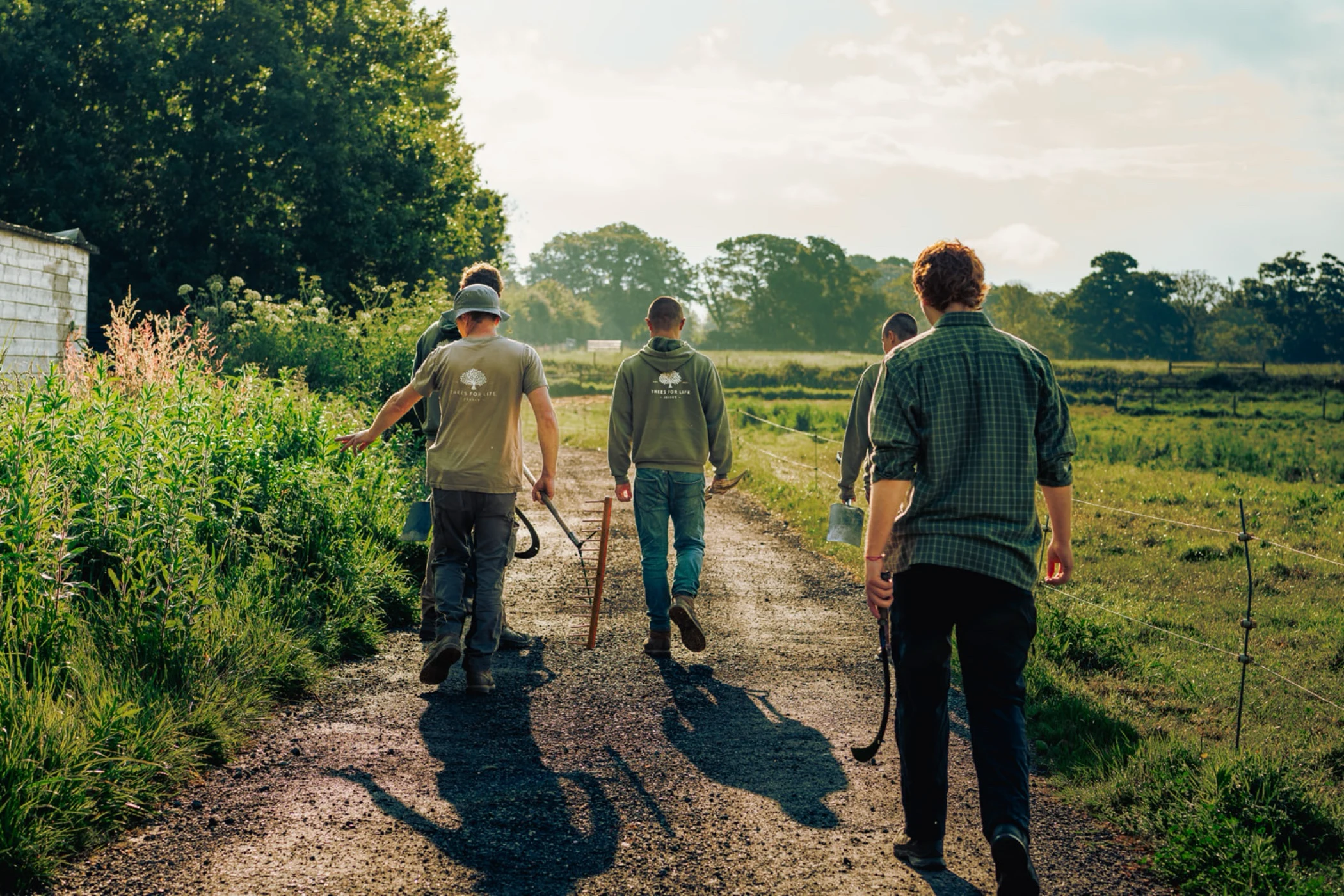
We host maintenance volunteering at Val de la Mare on the first Friday of the month; activities sometimes including ivy cutting. You can visit our website to register as a volunteer or find out more.
Make a difference
Every donation plants roots for Jersey's future. Support our work today.
What we've achieved together
Since our founding, Jersey Trees for Life has grown from a vision into a thriving community. Here's what we've built.