Yew beauty: Ancient yew at St Clement’s Church
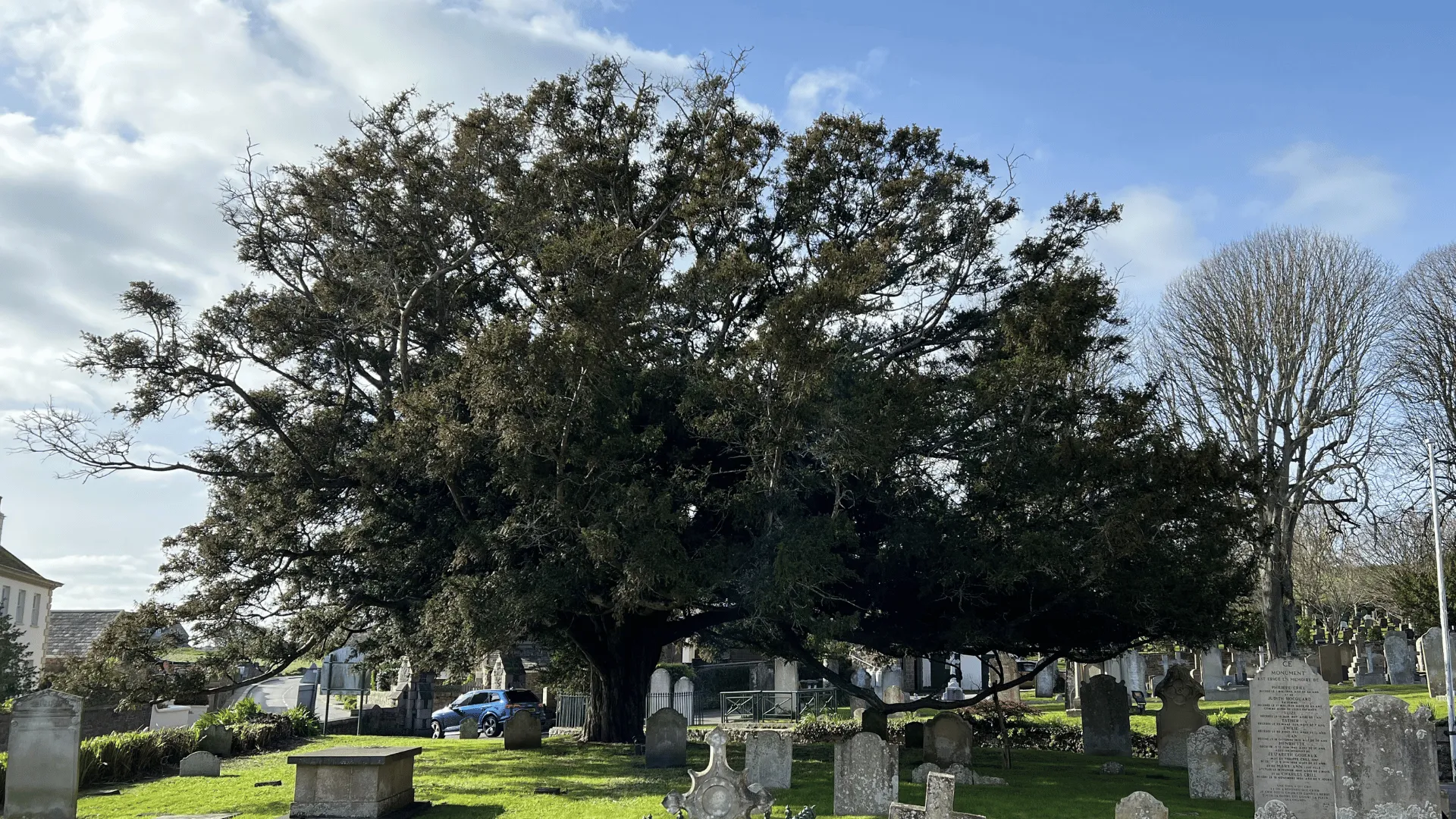
Standing stoically in the cemetery in front of St Clement’s Church is one of Jersey’s best-known trees, a European yew (Taxus baccata) estimated to have been planted around 1700. For context, that’s seven years before Scotland and England united, when our population was 17,000 or so and most of us spoke French. No local tree is thought to be older.
At 11 metres high with a 3.2 metre girth, this glorious specimen is easily visible from the adjacent main road. It’s in great surroundings too, with Jersey Biodiversity Centre stating: “Botanically this is probably the one of the best-maintained and most biodiverse of all our churchyards.”
Someone who might agree is renowned dendrologist Owen Johnson. He visited us in 2009 to assess candidates for The Tree Register, an organisation that collates statistics and designates ‘champion’ status to superlative regional and national specimens across the British Isles and Ireland. The St Clement’s Church yew has earned its status.
Yews are common in churchyards, due in part to being symbol of death and rebirth, which perhaps ironically was originally a pagan belief. They also deter grazing animals with their notorious toxicity. For example, 900g of yew needles could kill an average-sized horse. In fact, only one part of Taxus baccata isn’t poisonous – the flesh of the females' red, berry-like arils. The seeds remain highly toxic, however, albeit popular with birds, most of which swallow and disperse them.
Interestingly, the poisonous agent in yew (taxane) is used in chemotherapy drugs. It’s also the origin of its Latin family name. Death and Taxus jokes abound.
Given yew’s association with death, graveyards and poison, you can understand the origins of its ‘Tree of the Dead’ monicker, even if this shouldn’t detract from its greater value and beauty.
A less morbid yew association is longevity, likely partly linked to their churchyard ubiquity. It’s common for them to live beyond 600 years and plenty exist that are far older. The UK’s oldest is Fortingall yew in Perthshire, among the oldest living trees in Europe at an estimated (average) 5,000 years old. Put differently, it was around during the early Bronze Age. Insert ‘blown mind’ emoji.
If it hadn’t been for the Occupation, we may have had trees this old – a salient reminder to protect what we have and something for our politicians to consider.
Make a difference
Every donation plants roots for Jersey's future. Support our work today.