Winter to spring
In early spring deciduous trees come out of dormancy, which is a means of saving energy and water over winter by shutting down. Blackthorn and cherry plum are examples of early starters in February. For conifers, dormancy means go-slow rather than stop – so coming out means speeding up again.
Triggered by longer days and higher temperatures, new growth appears on twigs while buds swell and burst into life. ‘Budburst’ is a classic sign of spring (although buds start to grow before winter).
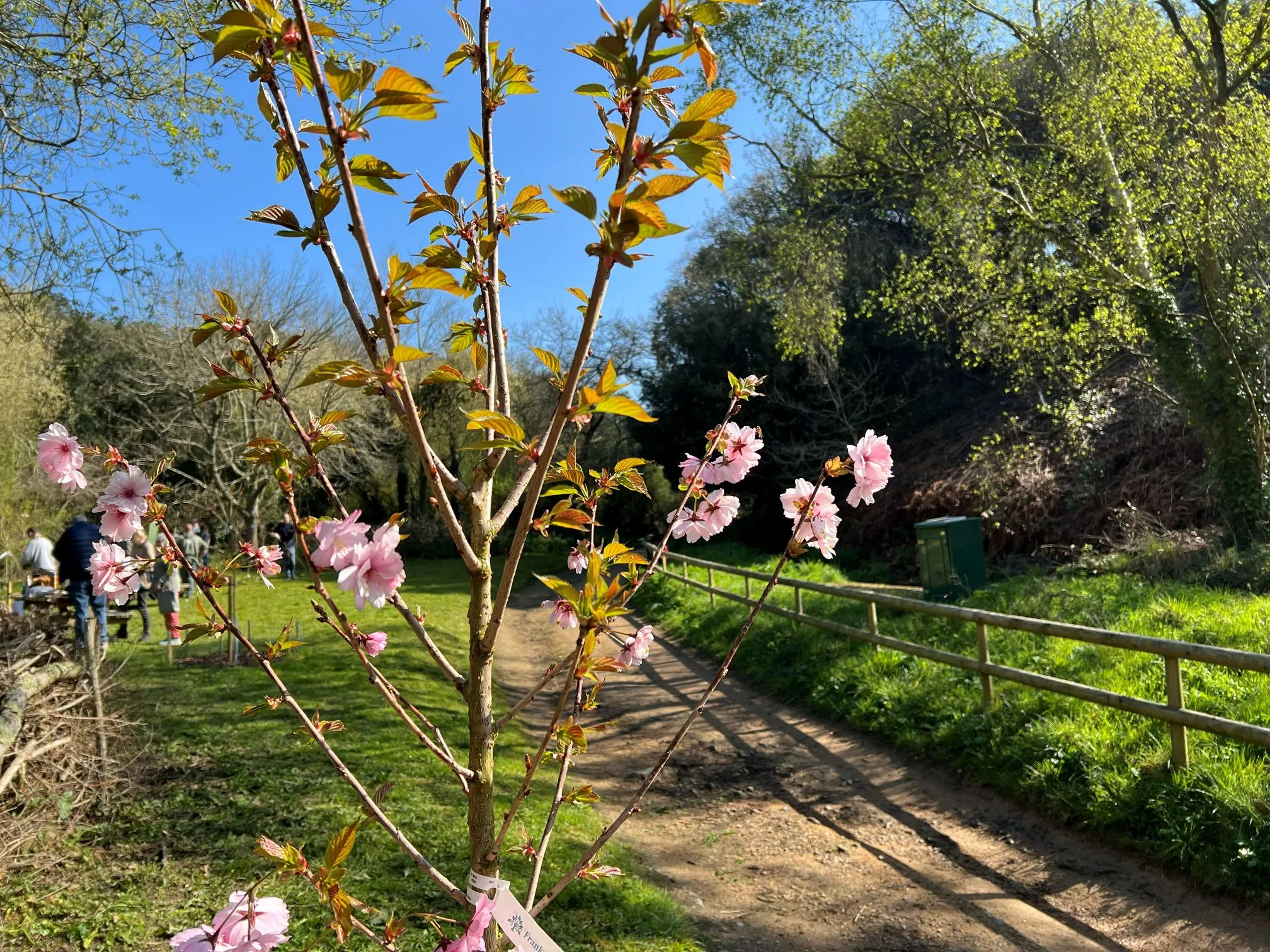
In March we see the likes of horse chestnut and oak ‘budbursting’, maple and willow coming into leaf and pear and plum blossoming, while in early April the world-famous Japanese cherry (Sakura) blossom takes place. You can check out ours at Val de la Mare – thanks to Embassy of Japan UK for gifting these to us.
Photosynthesis and transpiration begin as leaves unfurl from buds with most deciduous trees flowering soon thereafter.
Spring is a time of fast growth from root to canopy but has pros and cons threats-wise. Although there’s less danger from storms, cold, snowfall or dry air, trees are more likely to be attacked by the likes of animals, fungi or certain pathogens like anthracnose and fireblight.
The earliest budburst recorded by Forestry England since records began in 2010 was a hazel on 29 November 2021. The latest was an English oak on 3 May 2013.
For anyone with trees, spring is the time to think about watering, mulching, pest management and (for most trees) pruning.
Image: Sakura cover photo by Gruendercoach (Pixabay)
Make a difference
Every donation plants roots for Jersey's future. Support our work today.