Urban tree selection
It’s no secret that a rapidly changing climate is having a profound effect on trees worldwide and Jersey is no exception. Spring is arriving earlier and summers are getting drier while winters are noticeably warmer and wetter.
Naturally these changes are detrimentally affecting the long-term suitability of many of our most familiar tree species. Examples include two of the most ubiquitous, silver birch (Betula pendula) and Scots pine (Pinus sylvestris), which are already starting to struggle locally as the new climatic paradigm takes hold.
In terms of tree selection, there are further suitability considerations beyond climate. Common walnut (Juglans regia) is a great example, as despite having reasonable tolerance to heat, it has large roots and a huge crown, is intolerant of soil compaction and its fallen husks stain surrounding paving. This indicates that space, proximity to buildings and footfall-fuelled soil compaction are all relevant to urban planners, as are microclimates and pollution hotspots.
With these factors in mind, it’s more important than ever to ensure that we prioritise not only urban planting but also associated tree suitability and selection. Therefore, if this is relevant to your work, or if you have a small garden in town, it’s worth looking at the following list of species that we recommend as being ideally suited to Jersey’s streets and urban areas:
Celtis australis (European nettle tree) / One of the Mediterranean’s most popular street trees.
Chamaerops humilis (Mediterranean dwarf palm) / Excellent low barrier tree due to basal leaf stem thorns.
Citrus x meyeri (Meyer lemon) / Edible fruit, sweet scent, perfect for containers.
Cordyline australis (cabbage palm) / Wonderfully scented flowers in spring.
Gleditsia triacanthos 'Skyline' (honey locust, cultivar) / Elegant yet tolerant of drought and heat.
Jacaranda mimosifolia (blue jacaranda) / Heat-tolerant with stunning flowers and feathery foliage.
Lagerstroemia indica (crêpe myrtle) / Thrives in heat and has stunning red and white flowers.
Phoenix canariensis (Canary Island date palm) / Great focal point that thrives in heat but has leaf spines.
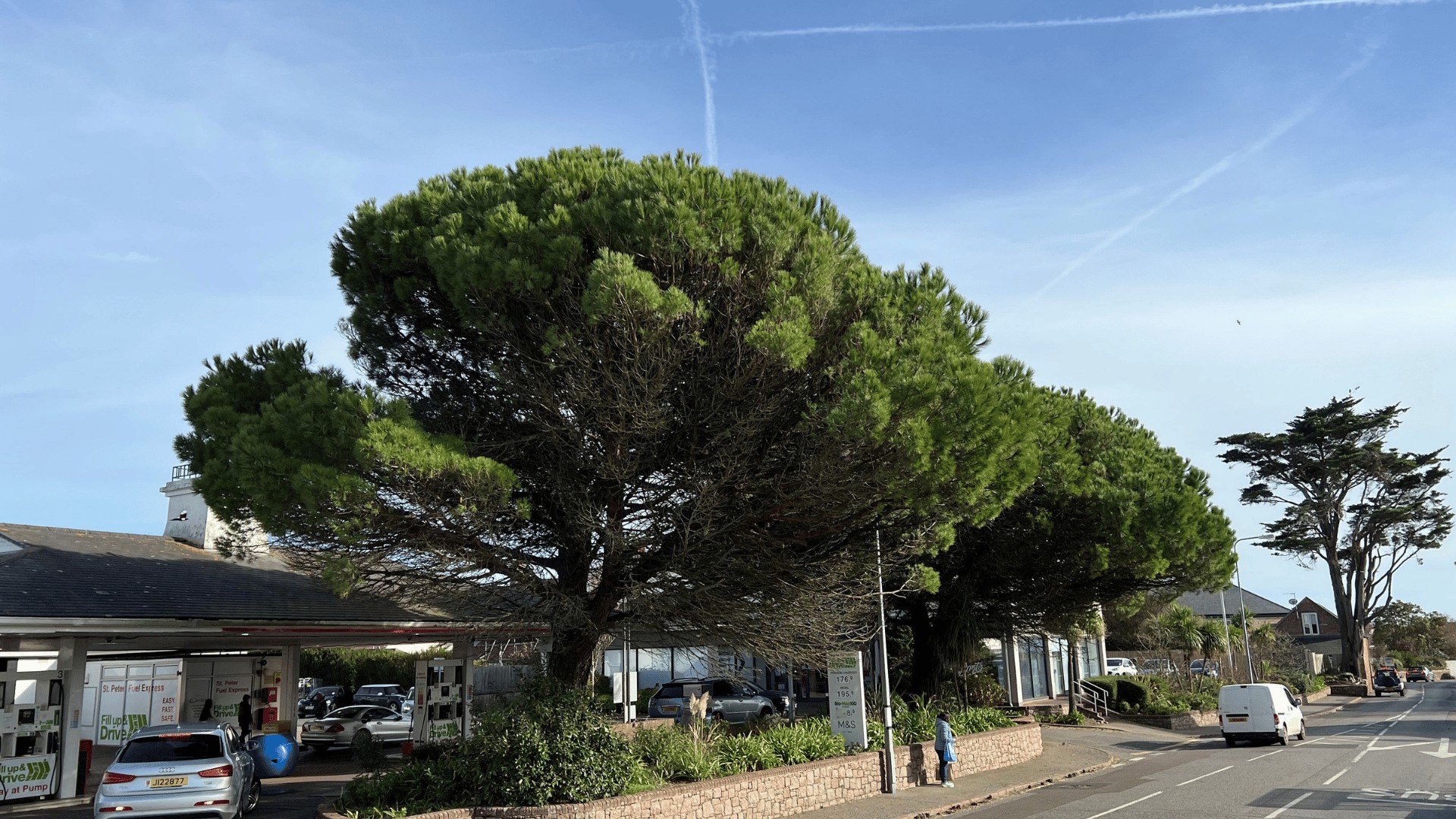
Pinus pinea (stone pine) / Classic Mediterranean boulevard tree with edible nuts.
Pistacia chinensis (Chinese pistache) / Tough street tree with bright orange-red autumn colour.
Quercus suber (cork oak) / Resilient oak already growing well in St Helier.

Schinus molle (Peppercorn tree) / Hardy street tree that produces edible pink peppercorns.
Styphnolobium japonicum (Japanese pagoda tree) / Extremely tolerant slow grower ideal for street planting.
Regarding size, it’s important to be aware that a tree in a 12-20 litre pot will establish more readily and reach the same height over a five-to ten-year period as an expensive larger tree.
If you’re looking for further guidance around tree selection, feel free to get in touch.
Make a difference
Every donation plants roots for Jersey's future. Support our work today.