Urban tree life
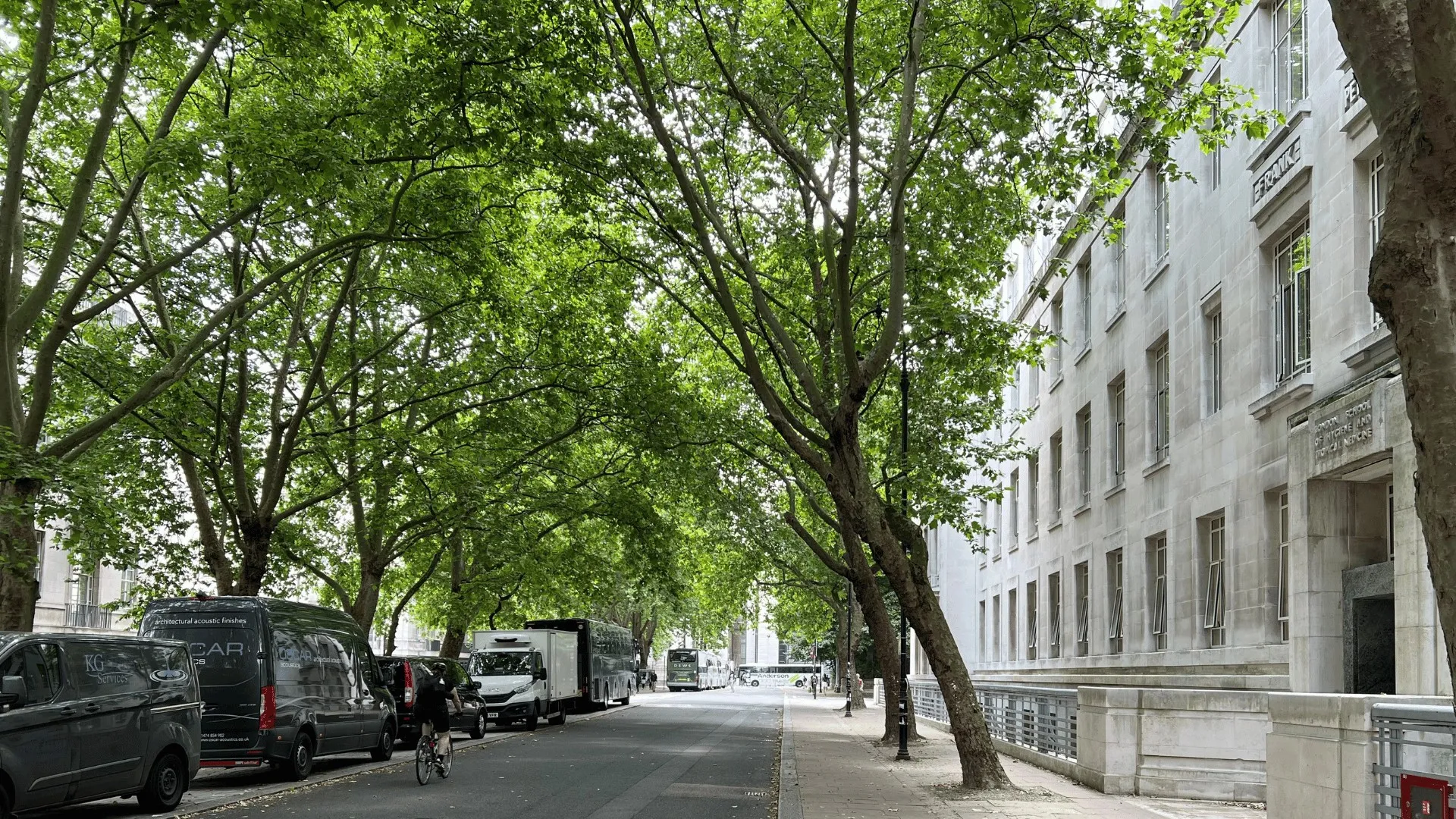
Life’s not easy for urban trees…
Trees in nurseries have their roots trimmed in autumn, often to under 10% of the original size. Crowns are reduced too, all for easier moving.
Removing root tips damages and disorientates the tree. Downward growth ceases, with a shallow root plate forming near the surface, severely restricting access to water and food.
Similarly, crown pruning means less photosynthesis and equivalent root starvation.
In a forest, roots are usually up to 1.5m deep but cover a wide area. With this seldom an option for urban trees, balance in high wind becomes problematic.
Forest and urban soil differ greatly. The former is soft, damp and humus-rich while the latter is depleted of nutrients and usually compacted due to treading, making water retention poor.
Whereas forests cool at night, buildings and roads radiate extra-dry heat. Other issues include exhaust fumes, winter salt and dog urine, which burns bark and kills roots.
Most urban trees fight alone and die prematurely but can still communicate when planted with their own species.
Urban redwoods use the extra light to rapidly grow up and out. However, they eventually lose the ability to grow, also becoming susceptible to fungus in their less dense trunks.
The dangerous caterpillars of the once critically endangered oak processionary moth have proliferated because they love a warm crown, which is typical in urban trees but not in forests.
Make a difference
Every donation plants roots for Jersey's future. Support our work today.