Summer to autumn
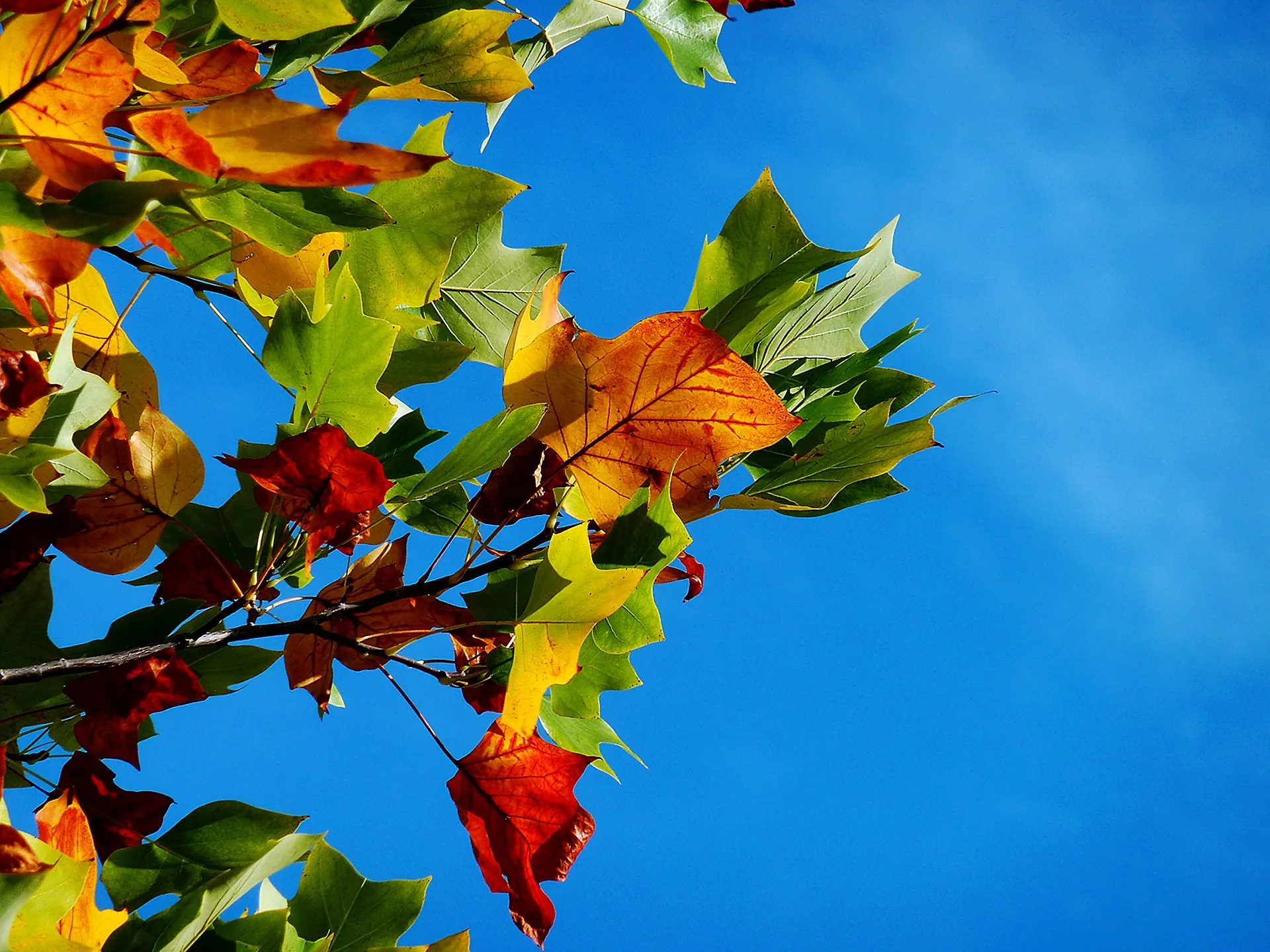
Autumn is when trees prepare for winter. For deciduous trees, this means preparing for hibernation. Conifers, however, don’t enter dormancy, instead continuing to draw water through their roots.
Deciduous trees shed leaves as they would expend more energy keeping them. This also reduces surface area exposure, leading to less branch damage from high wind, and protects from greater water loss.
The process of leaf-shedding to conserve water and energy is called abscission.
The reds, oranges and yellows of autumnal deciduous leaves are caused by the cessation of chlorophyll production. Certain trees, however, use red anthocyanins which turn leaves red, pink and purple.
This colourful autumn marker is known as tinting.
Deciduous trees use extracellular freezing and supercooling to deal with cold. The former freezes cell layers to protect tissue while the latter enables internal water temperatures to drop well below zero without freezing.
Jays bury thousands of acorns for winter but leave many of them in the ground, making them an important contributor to woodland regeneration. An abundance of beech nuts has also been linked to the improved survival rate of adult great tits in the UK.
Conversely, the UK mushroom season has increased to 75 days from only 33 in the 1950s; continuation of this trend is likely to negatively affect trees as aggressive fungi proliferate.
Make a difference
Every donation plants roots for Jersey's future. Support our work today.