Fight for light
Fight for your light…
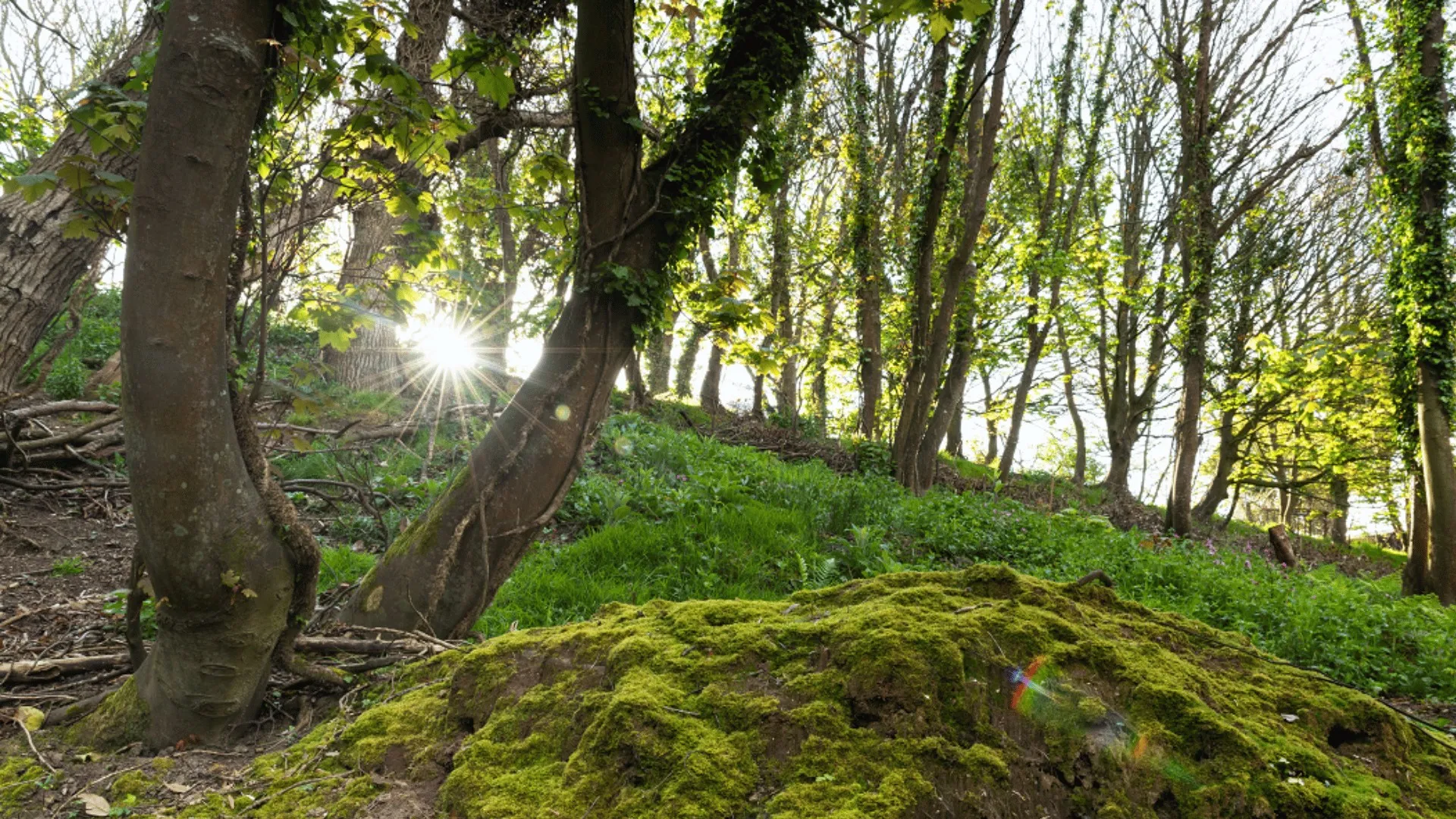
Sunlight is particularly important to a forest. At home you might be more worried about pests or soil quality whereas a forest is formed around its trees’ hunger for light.
Different species have evolved to suit different conditions with some, (e.g. firs, beeches) happy to hog 97% of canopy sunlight. Here, offspring are fed by their mothers, taking what little light they can while non-relatives rely on other survival strategies.
Conversely, recent studies have shown competition for sunlight in rainforests to cause strangely consistent tree sizes.
In deciduous woods, many forest flowers bloom in early spring when the trees are still hibernating. They capitalise on the brief window, storing food in their roots before tree buds appear – a harbinger of ten months in the shadows.
Ivy is one of few plants able to make its way from floor to canopy. Due to its surface coverage and mass it can terminally weaken trees that require a lot of light.
Mistletoe is a hemiparasite, photosynthesising for itself while taking the tree’s minerals and water (plus some sunlight). Unlike ivy it first establishes itself at the treetop, carried by birds.
Mosses require sunlight and use trees for support. Typically ubiquitous, they can be absent in young coniferous forests before gaps appear in the canopy.
Image: Ben Linnell photography
Make a difference
Every donation plants roots for Jersey's future. Support our work today.